IODP Expedition 364 investigated the Chicxulub impact crater beneath the Yucatán Peninsula in Mexico. The crater, formed by the asteroid impact linked to the Cretaceous/Paleogene (K–Pg) mass extinction approximately 66 million years ago, is one of the best-preserved large impact structures on Earth.
The expedition focused on the crater’s distinctive peak ring, aiming to improve understanding of how large impact craters form and how rocks respond to extreme shock and deformation. Researchers also investigated the impact’s environmental effects, post-impact hydrothermal activity, the deep biosphere, and the recovery of life following the event.
As a mission-specific drilling expedition, Expedition 364 recovered core samples from the peak ring to approximately 1,500 metres below the seafloor. The cores provided new geological, biological, and environmental evidence about the Chicxulub impact and its long-term consequences for Earth’s climate and ecosystems.
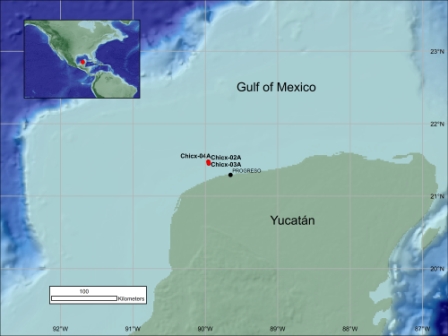
- Sites: M0077A
- Dates:
Offshore Operations: April 5 to May 31 2016
Onshore Operations: September 21 to October 15 2016, Bremen Core Repository, Germany
- Port: Progresso, Mexico
- Co-chief Scientists: Joanna Morgan and Sean Gulick
- Expedition Project Manager: (Claire Mellett) – contacts: Sophie Green and Gareth Carter
- Petrophysics Staff Scientist: Johanna Lofi
- MSP Outreach Manager: Kevin Kurtz (USA) and Barbara Matyssek (Germany)
- Drillship: L/B Myrtle
- End of moratorium: 15 October 2017
- Post-cruise meeting: 5-8 June 2018, Merida, Mexico