
This expedition investigated sea-level and climate changes during the last deglaciation, focusing on reef systems in tectonically stable regions of Tahiti and the Great Barrier Reef.
The study aimed to reconstruct sea-level change between approximately 20,000 and 10,000 years ago, including the timing and magnitude of major meltwater pulses—rapid increases in sea level caused by large amounts of ice-sheet meltwater entering the oceans. It also aimed to reconstruct changes in sea-surface temperature during this period.
Drilling and detailed analysis of reef sediments and coral colonies provided information on how rising sea levels affected reef growth, structure and biological communities. Coral geochemistry was also used to identify short-term climate variations, including possible evidence of past El Niño–Southern Oscillation, a recurring pattern of changes in tropical Pacific Ocean temperatures and atmospheric circulation.
Together, these records improve understanding of ice-sheet melting, global sea-level rise, ocean circulation, reef development and climate change during the transition from the Last Glacial Maximum, the period when global ice sheets were at or near their greatest extent, to the modern climate.
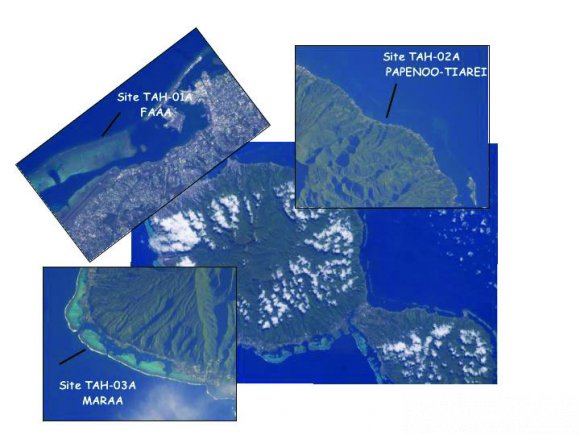
- Sites: M0005 to M0026
- Dates:
Offshore Operations: October 6 to November 17, 2005
Onshore Operations: February 13 to March 4 2006, Bremen Core Repository, Germany
- Port: Papeete,Tahiti, France
- Co-chief Scientists: Gilbert Camoin and Yasufumi Iryu
- Staff Scientist: David McInroy
- Expedition Project Manager: Jeremy Everest (lead), Margaret Stewart
- Petrophysics Staff Scientist: Hendrik Braaksma
- Drillship: DP Hunter
- End of moratorium: 4 March 2007
- Post-cruise meeting: 12-16 November 2008, Tahiti
Publications
Data and Samples
- search ‘Integrated Ocean Drilling Program (IODP-Europe)’ and ‘310’